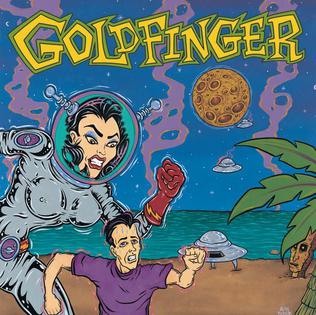
Goldfinger “Goldfinger” (1996) Review

Goldfinger on the internet gets confused with the movie, which is not half bad, mind you, but I always get frustrated when looking for one and end up getting the other. The two are sometimes interchangeable, and the Wikipedia article also has a link to the soundtrack! But we are not here to talk about that; we are here to review the Goldfinger record “Goldfinger,” released on February 27, 1996.

A 13-year-old me went to the record store and picked up this record after hearing “Here in Your Bedroom” on KROQ. The bass-driven standard from the band really speaks to the singularity of the punk rock concept the band was pushing. The pop punk moniker is strong on this record, with much attention paid to the melody of sound rather than the raw guitar work. That’s not to say you don’t get that fast-paced variety, but you definitely get a sense of melody throughout. Of course, “Here in Your Bedroom” highlights this.

Overall, the record feels good, like a hug from a familiar friend. It doesn’t stray from any path, is different from other punk records from the same year, and still holds up well. “Mind’s Eye”, “King for a Day”, “Mable”, and so many other tracks on the record hold up really well and prove that they were on to something in 1996 that they are still holding onto in 2022. Feldman’s songwriting stands out, and you’ll love the melodies on the record.

Goldfinger’s “Goldfinger” is an introduction to a band that would expand their catalog with maturity, speed, and bravado over the years. My favorite track is the reggae-infused, ska melody-driven “King for a Day”, which truly features a change of pace from some of the other tracks found on this record. Listening over again, the bass line just speaks to me, and heck, lyrically, “making plans to rule the world, spread yourself way too thin, wishing that you were king….” Still says something.
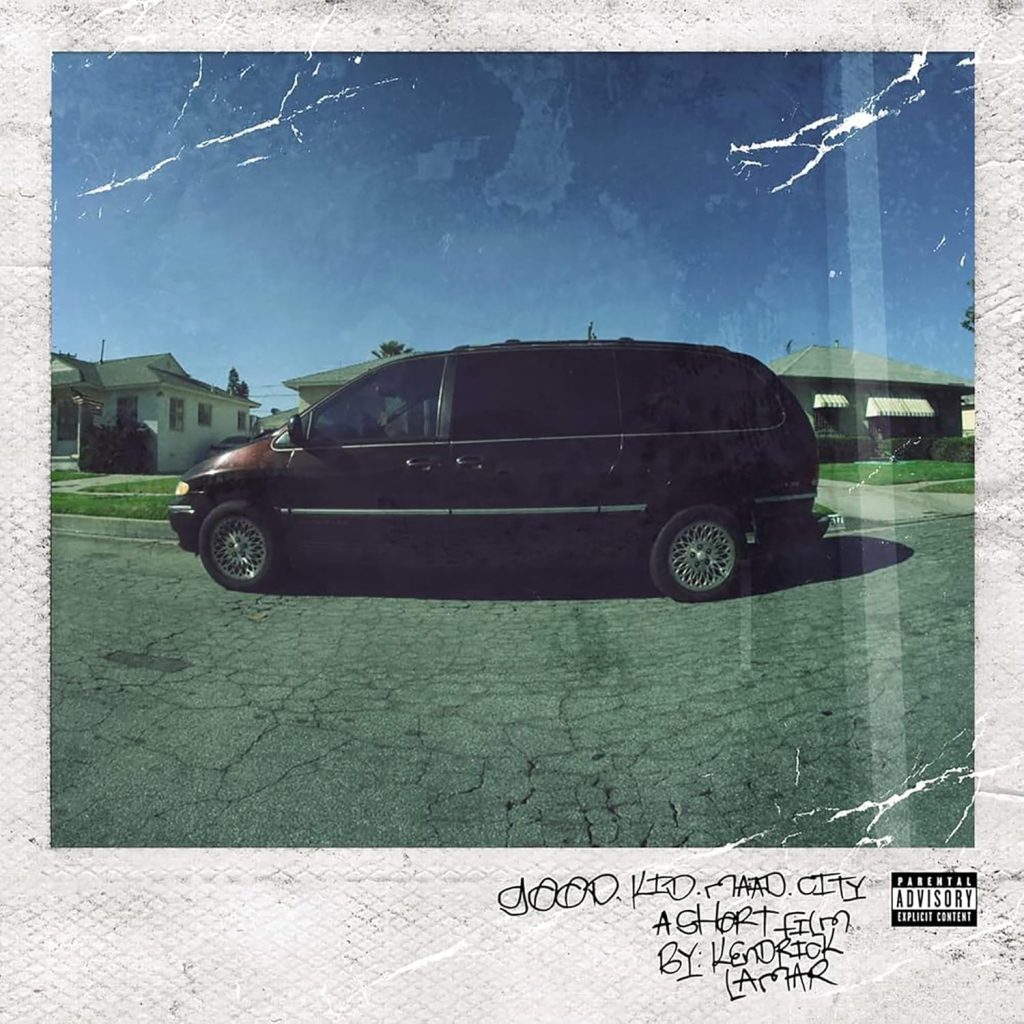
Kendrick Lamar “Good Kid, M.A.A.d city” (2012) Review

Kendrick Lamar “Good Kid, M.A.A.d city” (2012) Review

I was sitting in a cubicle in Los Angeles and overheard an argument about “Good Kid, M.A.A.d city”. One person said it was the best record of 2012, the other stated that there was something else, and I was just looking at escort ads. Cubicle land sucks unless you have headphones and an endless stream of music or comedy. I have always been lucky to be able to wear headphones, and that’s where I think Kendrick Lamar’s sophomore record is best heard. It’s a subdued record with many calming beats, interesting rhyme schemes, and something for every type of hip hop fan.

“Good Kid, M.A.A.d city” is a record you can’t just listen to and skip tracks. It’s a recording that requires you to sit still, put on headphones, and drift off into what the MC is saying. He’s telling stories from the hood, but it is not glorified at times, and it is not as gritty as some of the earlier 1990s hip hop that ran the gamut of offensive material. That’s not to say that there’s no street cred here, as it was produced in large part by Dr. Dre. You get a mix of styles, beats, and an eclectic blend of hip-hop tunes. It’s a solid release that I happen to go back to a great deal, even with a decade between us. I hope I don’t die in a cubicle job.

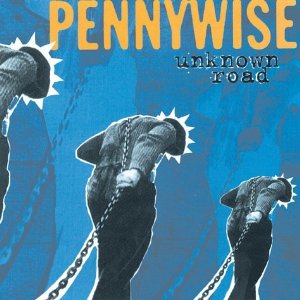
Pennywise “Unknown Road” (1993) Review

Pennywise Unknown Road CD COver

It’s hard to imagine, but the band Pennywise has been around a long time, and they have been putting out quality punk records since their inception. The band would put out the melody-driven “Unknown Road” in 1993, and while I don’t always include them in the term pop punk, once again, Rolling Stone said they were, and well, I’m not going to argue for the sake of writing a review.

The record is heavy-handed, hard-hitting, and straightforward in its approach to punk rock; the four-piece really delivers when it comes to the craft. There’s just something biting to the music, and while it has a sense of pop at times, it leans heavily into the skate punk, hardcore world with metallic riffs. That’s not to say that there’s no pop here; there’s plenty, including sing-along vocals at times, and slower tempos here and there. Overall, however, “Unknown Road” is one of the better records to come out of Southern California, and in 1993, there’s no finer example of the sound than that of Pennywise. Stand out tracks are all over the place, but my favorite, if I had to pick one, is “Time To Burn”, one of my all-time favorite songs from the band.

With 13 tracks and 33 minutes, the band puts their best foot forward and still puts out quality music. “Unknown Road” might be older, wiser, and hard to pigeonhole into pop punk, but it certainly has a lot of elements that make it sound great and, dare I say, poppy. It’s a solid record to have as part of your punk collection, that’s for sure.

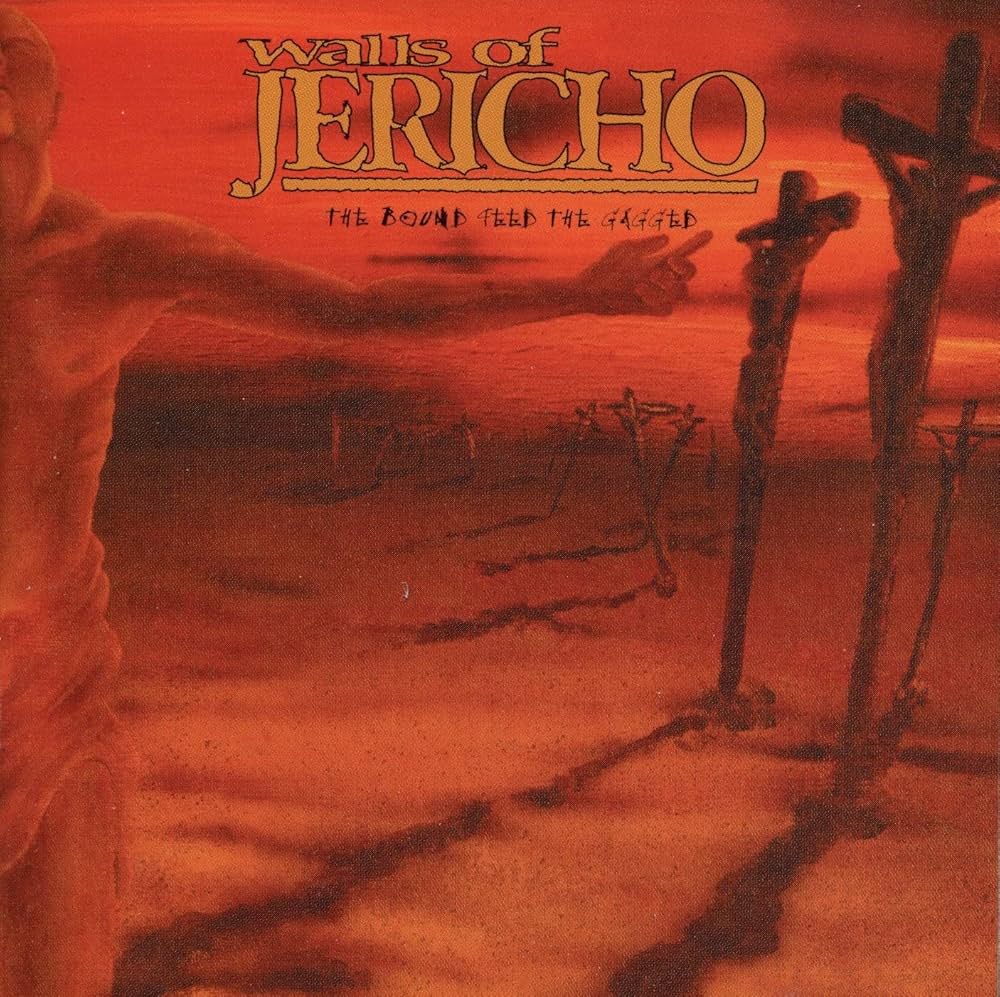
Walls of Jericho “The Bound Feed The Gagged” (1999) Review

Walls of Jericho The Bound Feed The Gagged record cover

1999 a mix of hardcore and metal bands was getting much attention. One of the bands making a name for themselves by being left of center was that of Walls of Jericho. In 1999, the band would release their first studio record, “The Bound Feed The Gagged,” and they would mix genres to catch you off guard. The resulting disc is a mix of metal riffs with hardcore breakdowns and even punk rock shifting speed at times. Despite their name, the band is not religious, and pummels the listener with sing-along choruses and metallic onslaught at other times.

Production-wise, this is not the most polished of records, with the guitars feeling slightly off, but not terrible. The guitarwork is good, don’t get me wrong, but it sometimes overshadows the bass and drums, and is second only to the vocals, which are screamed. Candace’s vocals are spot on, hardcore, at times feminine, but with enough gusto that she doesn’t fit in one category, giving the band a little bit of a leg up in terms of their song structures. “The Bound Feed The Gagged” puts pressure on your brain from the opening track, “Playing Soldier Again”, through the rest of the tracks, all of which stand independently with heavy-hitting measures. “Home is where the heart is”, “Unwanted Resistance”, “Full Disclosure”, and more round out the record highs, with an onslaught of metallic music you’re going to either love or hate. Female-fronted hardcore? Well, this is certainly a good record.

Pick up this solid record from Walls of Jericho by clicking here.

Point of Recognition “The Admiration of a Son” (1999) Review

Point of Recognition the admiration of a son cd cover

There is a location east of Los Angeles, quite a ways, known as the Inland Empire. There was a time during the late 1990s and 2000s when a surge of straightedge and hardcore bands started to come through and begin to get noticed on a significant scale. It wasn’t just straightedge, however, it was also Christian bands that began to get a great deal of focus, including No Innocent Victim, As I Lay Dying, Dodgin Bullets, Cast in Stone, Torn in Two, and many others. In the mix of those bands was a band with dual singers called Point of Recognition. They would release their debut record, “The Admiration of a Son,” on Rescue Records in 1999 and hit the ground running.

The first significant thing you’ll notice about “The Admiration of a Son” is the production values. It’s an independent recording, and while Rescue Records put it out, you can tell that the budget wasn’t very high. That doesn’t matter regarding hardcore, metalcore, or even punk, and you can easily push it to the side. Once you put that aside, you get to the crux of the record: an up-and-down push through hardcore and metallic riffs.

The metalcore sound of “The Admiration of a Son” comes through with the riffs on every track, with sing-along choruses breaking up the screams from the dual singers. You’ll find a balancing act at play here, where neither one gets over the other, and while they sound similar, you can tell one has a deeper reach. Lyrically, this is an assault; it’s a tackling record of Christian themes, which may turn some off. However, if you look past that, you’ll find that “The Admiration of a Son” is a good overall example of the Southern California hardcore, metalcore sound that was alive and well in 1999 and through the 2000s. The record holds up well but is an acquired taste.

You owe it to yourself to stream or buy this masterpiece here.

The Pietasters “Awesome Mix tape Vol. 6” Review

The Pietasters Awesome Mix Tape Vol. 6 CD / Vinyl Cover

Ska is one of my favorite genres of music. Something just speaks to me when you mix guitars, drums, bass, and, of course, horn sections. There are so many outstanding records under that banner, but some get to be above and beyond that, becoming essential records to listen to. One of those records is the 1999 release “Awesome Mix tape Vol. 6” by the Pietasters. By the time the record was released, it was their fourth studio record. The band had gone through some shifts and turns, and would put out what would become one of my favorites overall.

The record starts a little slow, but then builds up to a good pop sense, with catchy choruses, instruments flowing like water, and vocals that are a bit raspy but still catchy overall. Aside from the stellar performances here, you’ll find that the bass guitar work stands out a lot, especially if you’re a fan of the instrument. Listen closely and you’ll hear walking bass lines, and a lot of rhythm to offset the horn-heavy, even punk-rock style moments.

“Awesome Mix tape Vol. 6” is a record meant to be listened to as a whole, as it goes through some great transitional moments. The first three tracks tell a compelling story, with love, regret, and more. “Crying Over You” is a perfect companion to “Yesterday’s Over”, and “Can’t Stand It” is good overall. Released in 1999 on Hellcat Records and produced by Bad Religion’s Brett Gurewitz, you’ll find it hard to put down “Awesome Mix Tape Vol. 6”, as it is very much a soul record as much as it is a ska record. It’s not fast, easy to listen to, and is made better with a good libation.

Do yourself a favor and buy or stream “Awesome Mix Tap Vol. 6″” by clicking here.

Screeching Weasel “My Brain Hurts” (1991) Review

Screeching Weasel My Brain Hurts cd cover from 1991

Before punk broke out into the mainstream and before many bands got airplay on the radio, a few bands were playing pop-infused punk rock, and one of them, of course, was Screeching Weasel. The boys mixed pop influences with rock and roll, giving you frenetic-paced music without losing much to vocals. With the recording of “My Brain Hurts,” you get Screeching Weasel at their finest, before all the controversies clouded the band. There’s a snarl to the vocals you don’t get with modern releases, and the band played steadily through 14 songs and nearly 30 minutes of music.

“My Brain Hurts” sometimes feels like a Ramones album, and it is a credit to the band. Playing Ramones-esque music is not as easy as it seems, especially regarding sheer numbers and longevity regarding the tracks and themes. Screeching Weasel manages to channel The Ramones, the Clash, and others from the past to create a rocking record that doesn’t get enough attention amidst the heavyweights of pop punk.

Sure, it was 1991, and the term pop punk wasn’t just thrown around swiftly, but what else can I say about a record with such a sing-along attitude, 3-chords of progression, and that classic Ramones feeling? It’s a solid record from a band that has put in a lot of work to get to where they are, even if it is sometimes just bad. “My Brain Hurts” is a genre classic that holds up very well today, as in 1991. “Making You Cry”, “Guest List”, “Veronica Hates Me”, and much more greet you with a classic Weasel sound.

Pick up the original release of “My Brain Hurts” by clicking here, sucka!

Slick Shoes “Rusty” (1997) Review

slick shoes rusty lp cover from 1997

Returning to 1997, we find the pop punk world exploding with various bands. The era was full of musical talent, and Slick Shoes was one of the many bands to come out. I was first introduced to the band with their raw self-titled EP, which showcased an introduction to the punk rock act. It was raw, unfinished, with a bit of static here and there. Then came a semi-sonic shift for the band in the form of their debut record for Tooth and Nail Records, “Rusty”.

“Rusty” came out in 1997 and immediately hit the ground running, largely thanks to the fact that people bought anything Tooth and Nail released. I bought everything on the label, no matter what it was, and found joy in every single release up to a certain point in my life. Slick Shoes plays skate punk, pop punk, and straightforward punk rock with fast, frenetic guitar work and excellent attention to drumming. They are influenced by the bands you would find in the punk rock bins, and somehow find a way to stand out.

The only hindrance the band had, if any, was that the singer was underage at the time of recording and touring, and the band was stuck at times in the Christian scene. That isn’t a detriment, but it happened, and well, they had several records out before they got mainstream success. They eventually tore with Face to Face, Mxpx, and many others. “Rusty” has 16 tracks, and is 37 minutes long, with each song complementing the others in a record that has no downtime, and little to no lackluster tracks. This is a gem of a record to which you owe your time.

Feel like streaming or even playing the record on vinyl? Click here to jump into “Rusty”.

Max Roach “Drums Unlimited” (1966) Review

Max Roach performing with his drum kit during a 1960s jazz session, highlighting the artistry behind the Drums Unlimited album.

Max Roach is a name synonymous with drums. He is a great drummer, and that’s about as simple as I can put it. Fly back to 1966, and we visit a record from Roach called “Drums Unlimited”. Sometimes referred to as a “manifesto” of sound, the recording is a story-driven device that is both subtle at times and bombastic in the way it moves through production. It is more than background music, and Roach commented on that at one point. To quote Roach, “I wanted to create a concept where drums could play themes and variations like any other instrument”, which is why “Drums Unlimited” is so important overall. 

At first listen, the record seems to fit well with the jazz records of the 1960s. It has a coffee house feel, and the record walks through some upbeat moments, playfully drawing on the experimentation of jazz music. You get this at the starting line with the first track, which features a drum solo, and plays as a starting point to a somewhat rhythmic recording.

The record doesn’t just sit with solo work, as the band showcases talent with the second track, clocking in over 12 minutes, presenting a steak-house quality invitation to reason with instruments. The horn section has been noted as hard bop, and players Freddie Hubbard and James Spaulding bring forward a playful nature. There are waves of sound here, including stand-up bass, piano, and of course, what we all came here to listen to, drums.

Making up the rest of the cast on “Drums Unlimited” is interesting for those who generally follow jazz music. Otherwise, you’re not going to know who these players are. These guys include Freddie Hubbard, James Spaulding, Ronnie Mathews, Jymie Merritt, and Roland Alexander. These players, above all, bring together their talents to create a memorable jazzy record.

People generally like “Drums Unlimited”, and many have noted that the drum solos and breaks are good with swinging jazz pieces to complement it all. Major review sites talk about how creative this record is, and many find it to be an essential piece to their collection, so you’re in good company if you’re eyeing this one to add or stream.

At first glance, I thought this was just background music. However, upon listening to it a bit more, I realize that this is an excellent record for tuning into instruments. Whether you like drums or just want something jazzy to dance or drink to, you’ll love how “Drums Unlimited” plays to Max Roach’s and company’s strengths.

Feel like streaming or owning this jazz gem from Max Roach? Click here to get it on the cheap.

Talib Kweli “Quality” (2002) Review

Talib Kweli thinking and just sitting around

An hour and five minutes of hip-hop is what you get when you decide to put on the debut studio record from Talib Kweli. Starting things off on “Quality” is Dave Chappelle, keynote speaker, who tells a random story with a cool soothing beat. Then, we are treated to Kweli’s rhymes. Forget what you know about the popular hip hop you’ve heard in the present, because this isn’t mumbling, it isn’t street or gangster, it’s a bit more conscious. Talib has stories to tell, from various circles of his views, and other topics that you would expect from rap’s heaviest hitters.

“Quality” is just that, it’s clarity of sound, clear vocals, clean lines, and choruses that will have you floored at times. There’s a lot to unpack from this record, and something for everyone. Whether you’re a college student trying to just mellow out with background music or you’re a hip-hop head that wants to revisit some of the best in the business, you’ll find that “Quality” features something for everyone. It has a sensibility, an honesty in the lyrical development, and an optimism, as Pitchfork magazine put it. It’s a reflection of an artist who is not just about bravado but is also a storyteller with a focus on political affirmation, social studies, and street-wise knowledge. Production from Kanye West and others makes this a must-listen to record, twenty-something years after it was initially released.

In the mood to stream or perhaps spin a vinyl? Click here and pick up this gem.